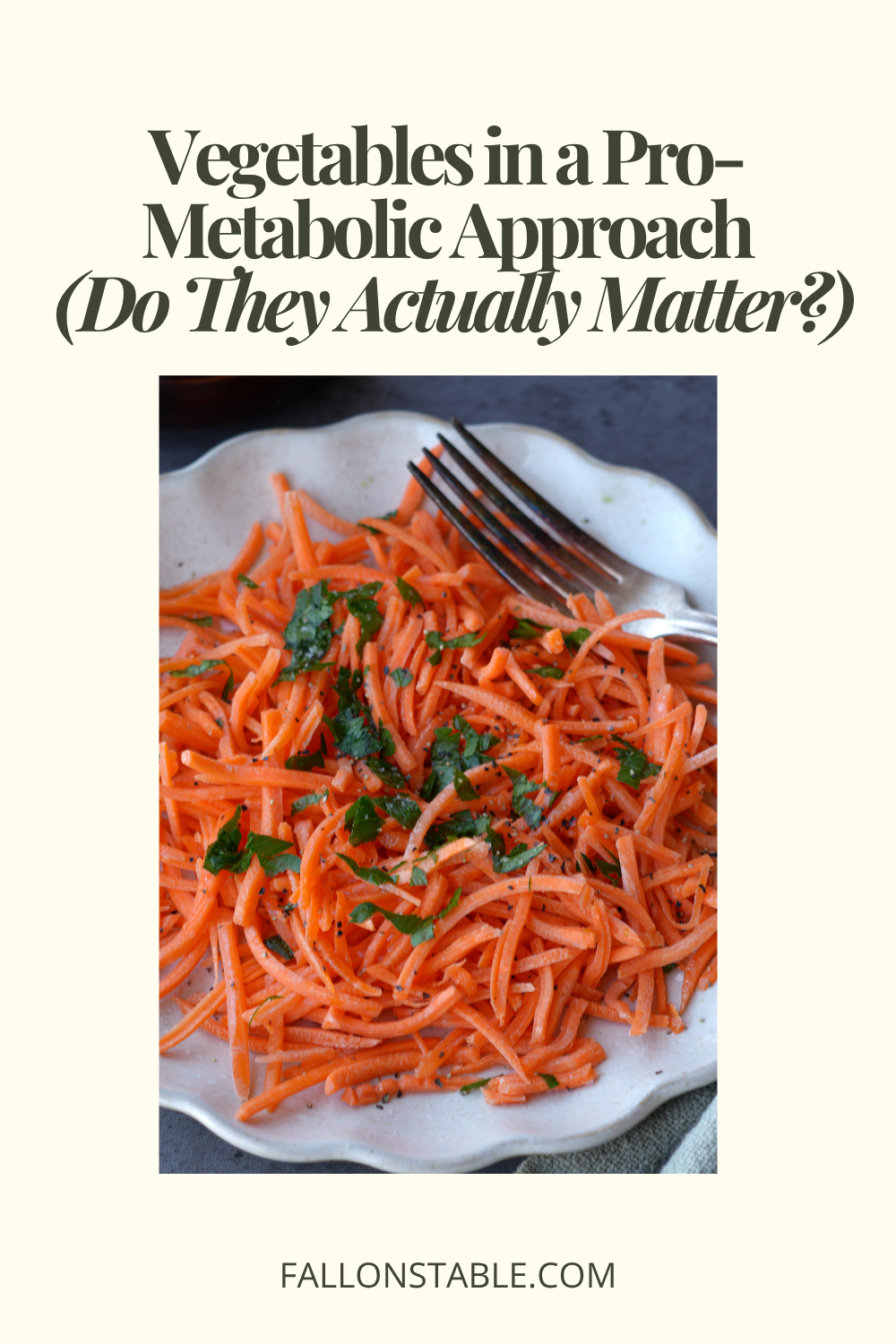
Vegetables in a Pro-Metabolic Approach (Do They Actually Matter?)
Veggies in the Pro-Metabolic World
You may have noticed that in more “pro-metabolic” spaces, there tends to be less emphasis on vegetables than in dietary approaches like Paleo, Whole30, or general wellness culture.
So let’s talk about that!
Because the goal here is not to swing to the opposite extreme.
👉 Veggies aren’t bad.
👉 But they’re also not the miracle food many of us were taught they are.
Like most things, this comes down to context, balance, and how the body actually functions.
First - if you’re new here - welcome!
I’m a Certified Nutritional Practitioner and recipe developer who helps women feel empowered in their health journey, learn how to confidently eat well, find healing and support during chronic illness, and gain kitchen confidence through simple, delicious recipes for you and your family!
Where Our View of Vegetables Got Skewed
For a long time, many of us were taught that vegetables, especially leafy greens, should be the foundation of a “healthy” diet.
Big salads. Raw kale. Spinach smoothies.
And often, the more the better. But if we’re honest…
How many of us actually feel our best eating a giant bowl of plain raw greens every single day? I sure don’t!
While a fresh salad absolutely does sound good from time to time, I crave warmth, variety, and hearty meals, too.
There’s a reason for that!
Why More Vegetables Isn’t Always Better
Let’s break this down in a practical, real-life way.
1. Some vegetables are not very energy-dense (not all!)
Raw greens especially are extremely low in calories (energy).
So if your meals look like:
small breakfast
salad for lunch
salad for dinner
You could easily be drastically under-eating without realizing it.
And when that happens?
👉 Your body starts asking for more energy.
Which often shows up as:
intense cravings
constant hunger
feeling unsatisfied after meals
This isn’t a lack of discipline! It’s your body trying to meet its needs.
RELATED POST: 10 Signs Your Metabolism Is Slowing Down (And Why You Might Not Be Eating Enough)
2. They’re harder to digest than we’ve been told
Plants contain:
fiber
anti-nutrients
natural defense compounds
These aren’t inherently “bad,” but they can make digestion more complex. (Yes, even fiber!)
Unlike animals that are designed to live on plants (with multiple stomachs), humans have a much simpler digestive system.
So while we can eat vegetables—
👉 it doesn’t mean large amounts of raw vegetables are always ideal.
This is where preparation matters!
3. Raw isn’t always better
Raw veggies are often praised as the “healthiest” option. But in many cases, cooking:
improves digestibility
reduces irritation
makes nutrients more available
Traditionally, vegetables were:
cooked
fermented
or served alongside protein and fat
Not eaten in massive raw portions as a standalone meal.
So…Should You Eat Vegetables?
Yes! This is not an anti-vegetable post.
Vegetables can absolutely have a place in a nourishing, supportive way of eating.
But they’re not meant to:
replace meals
be the primary source of energy
or carry the full weight of your nutrition
👉 They’re a complement, not the foundation!
A More Supportive Way to Eat Vegetables
Instead of forcing down giant salads or avoiding vegetables altogether, we can take a more balanced approach!
1. Choose types that are easier to tolerate
Raw kale and raw spinach → harder to digest
Lettuces and baby greens → often easier
Pay attention to how your body responds.
2. Don’t eat vegetables on their own
Vegetables should be paired with:
protein
healthy fats
carbohydrates
This helps:
stabilize energy
improve satisfaction
support metabolism
3. Pay attention to how you feel
After eating veggies, ask:
Do I feel warm or cold?
Satisfied or still hungry?
Calm or bloated?
Your body gives feedback, listen to it!
4. Don’t forget about “fruit vegetables”
Some of the easiest-to-digest options are technically fruits:
tomatoes
cucumbers
squash
bell peppers
These tend to be more enjoyable, easier on digestion, and more versatile!
5. Include root vegetables
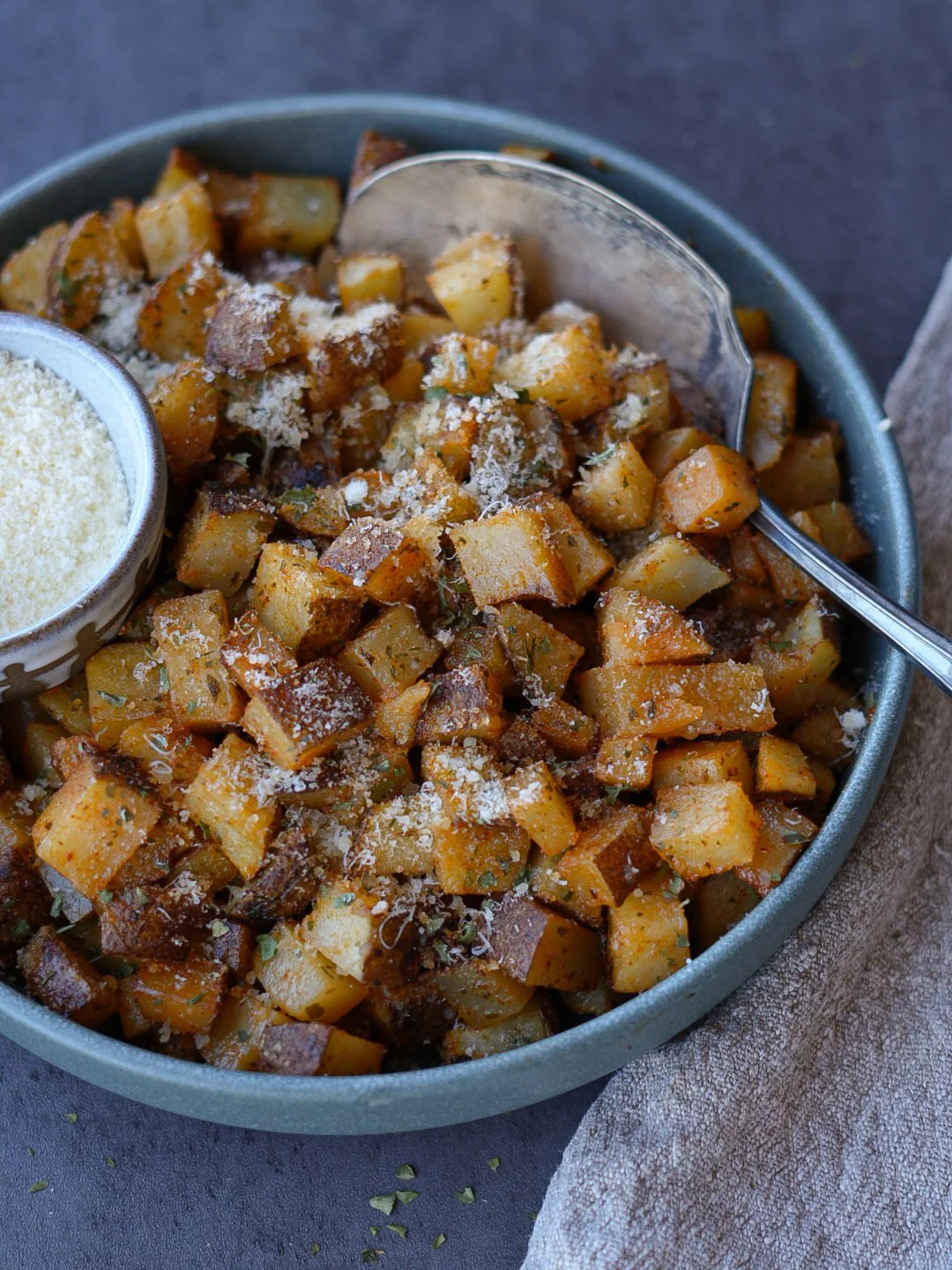
Root vegetables are one of the most supportive categories:
potatoes
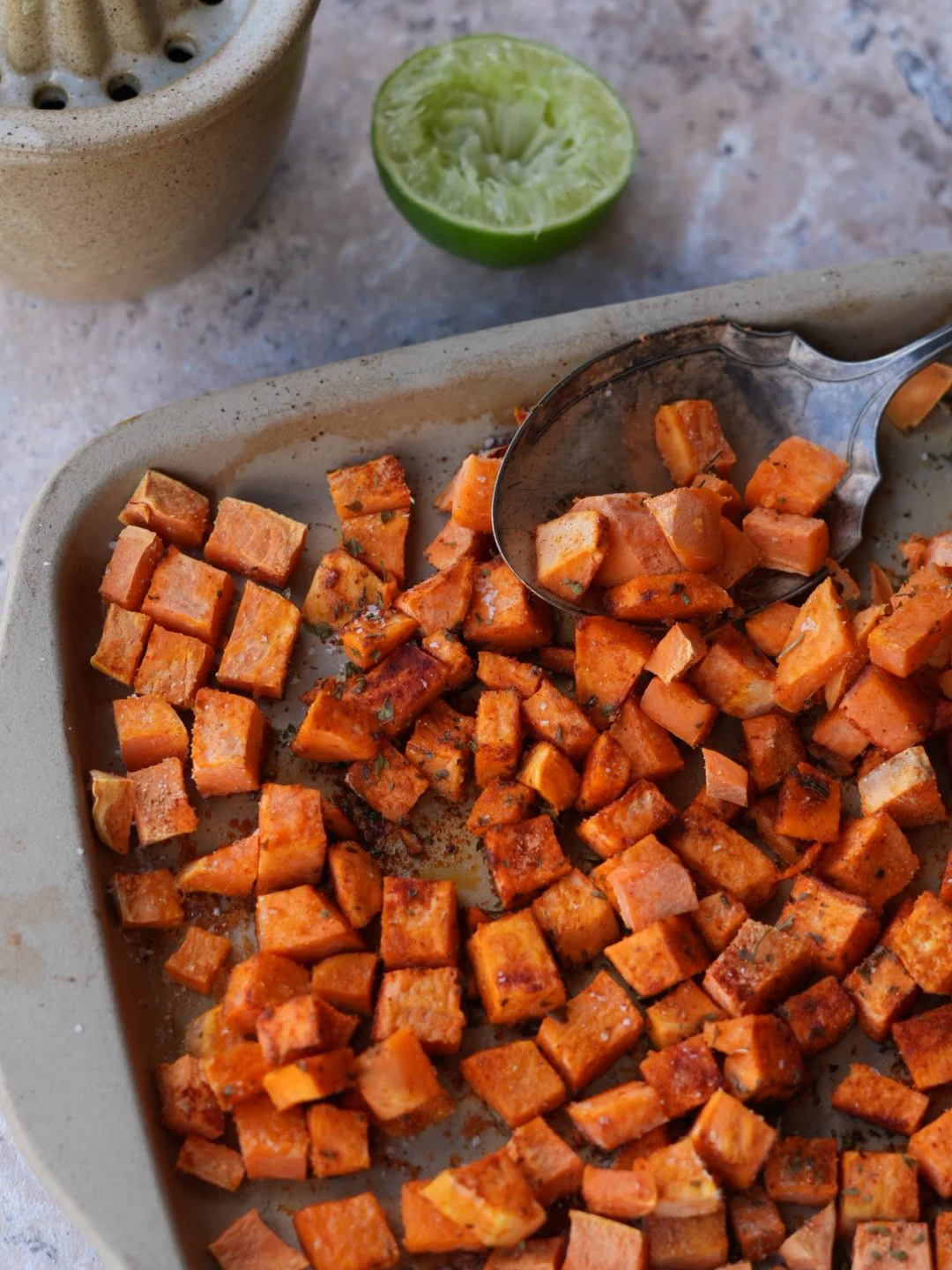
sweet potatoes
carrots
beets
parsnips
All provide:
energy
nutrients
and are generally well-tolerated
6. Try fermented vegetables
Fermenting vegetables:
improves digestibility
supports gut health
adds beneficial bacteria
This is a traditional practice for a reason!
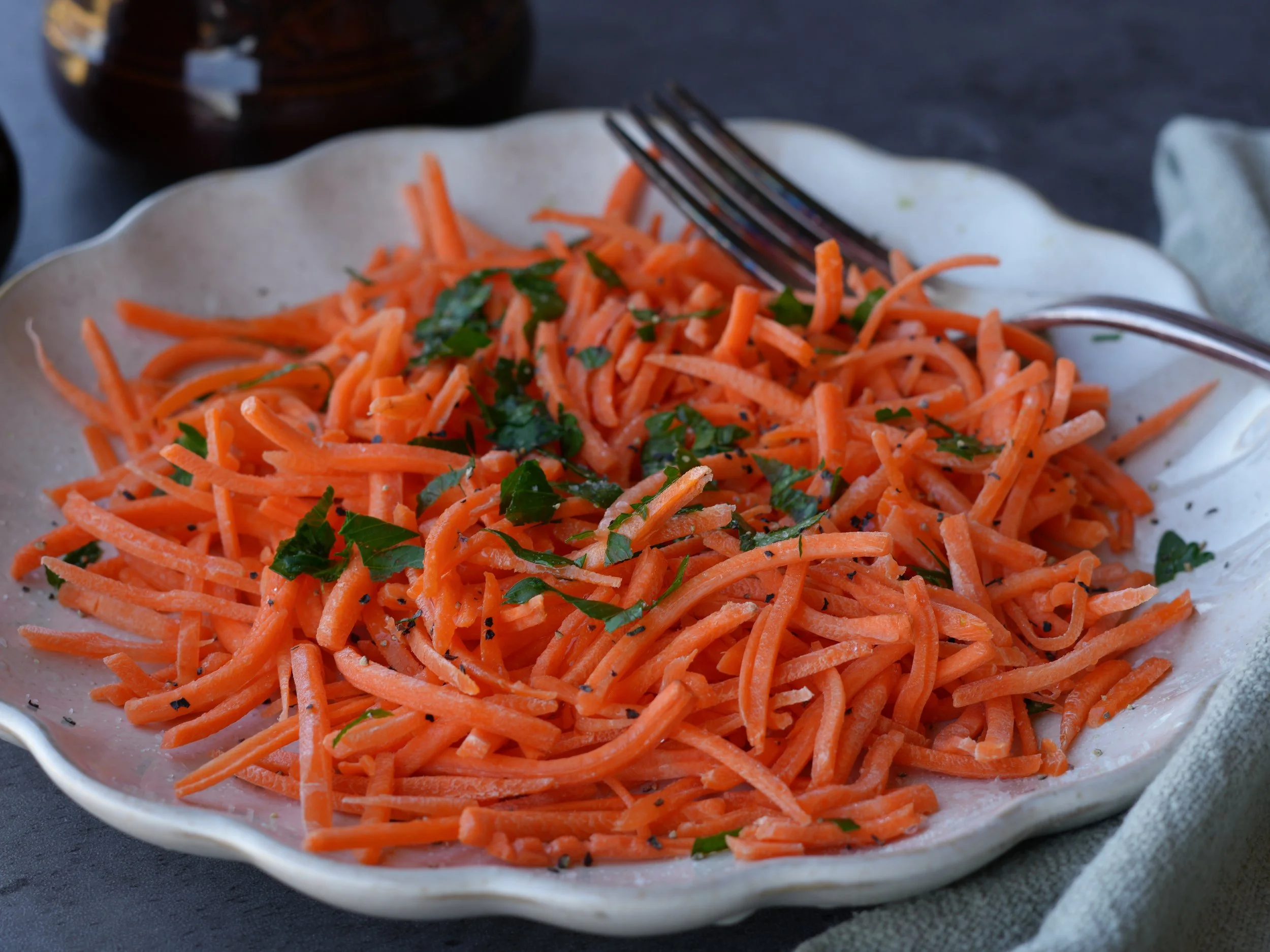
What About the Raw Carrot Salad?
Raw carrot salad has gotten quite the attention over the last several years, and for good reason!
This quick recipe was originally created by Dr. Ray Peat himself! It includes shredded carrots, a splash of coconut oil and vinegar (white, ACV, etc) and some sea salt.
Carrots contain a unique type of fiber that may support:
digestion
detox pathways
hormone balance
Is it magic?
No.
But it can be a incredible addition to an already nourishing diet, not a replacement for one!
(I have a fun apple and carrot salad recipe that is perfect for fall - you can find it in my Batch cookbook!)
What did Ray Peat have to say about all this? If you can wade through this article, it’s fantastic!
“Poor people, especially in the spring when other foods were scarce, have sometimes subsisted on foliage such as collard and poke greens, usually made more palatable by cooking them with flavorings, such as a little bacon grease and lots of salt. Eventually, "famine foods" can be accepted as dietary staples. The fact that cows, sheep, goats and deer can thrive on a diet of foliage shows that leaves contain essential nutrients. Their minerals, vitamins, and amino acids are suitable for sustaining most animal life, if a sufficient quantity is eaten. But when people try to live primarily on foliage, as in famines, they soon suffer from a great variety of diseases. Various leaves contain antimetabolic substances that prevent the assimilation of the nutrients, and only very specifically adapted digestive systems (or technologies) can overcome those toxic effects.”
😳😳😳
What This Means for Your Health
When we zoom out, this conversation isn’t really about vegetables - it’s about how we’ve been taught to approach food.
For many women, “healthy eating” has looked like:
eating lighter
choosing lower-calorie options
prioritizing volume over nourishment
And vegetables often become the centerpiece of that approach, but if that way of eating leaves you:
tired
hungry
or constantly thinking about food
👉 it may not be supporting your metabolism the way you think.
A More Nourishing Perspective
Vegetables can absolutely be part of a healthy diet. But real nourishment looks like:
eating enough overall
choosing nutrient-dense foods
building balanced meals
supporting your body’s energy needs
Not just filling your plate with the lowest-calorie option.
If You’re Trying to Eat More “Pro-Metabolically”
Start here:
Don’t rely on vegetables as your main source of food
Build meals around protein, carbs, and fats
Use vegetables as a supportive addition
Focus on how your body actually feels

Final Thoughts
Vegetables aren’t the enemy. But they’re also not the foundation of a nourishing diet.
👉 They’re one piece of the puzzle.
And when we place them in the right context - alongside enough food, balanced meals, and a supported metabolism -
they can actually work with your body, not against it.
If You Want Help Putting This Into Practice
If you’re tired of overthinking food and just want simple, nourishing meals that actually support your body—
That’s exactly why I created my Nourish Cookbook & Nutrition Guide.
No extremes.
No food fear.
Just real, balanced meals designed for real life.
And if you want an easy place to start:
👉 Download my FREE guide: 5 Simple Real Food Family Dinners